VMPL
Mumbai (Maharashtra) [India], September 21: The Water Stewardship Dialogue 2026 brought together senior leaders from industry, government, civil society, technical institutions and the development sector in Mumbai today, placing collective action at the centre of India’s evolving water stewardship agenda.
Convened around the theme “One Basin. Many Futures. Built Together.”, the Dialogue examined a growing imperative for corporate India: building water resilience requires shared intelligence, aligned investment and sustained collaboration across institutions. Businesses, communities, agriculture, ecosystems and public systems ultimately depend upon the same watersheds.
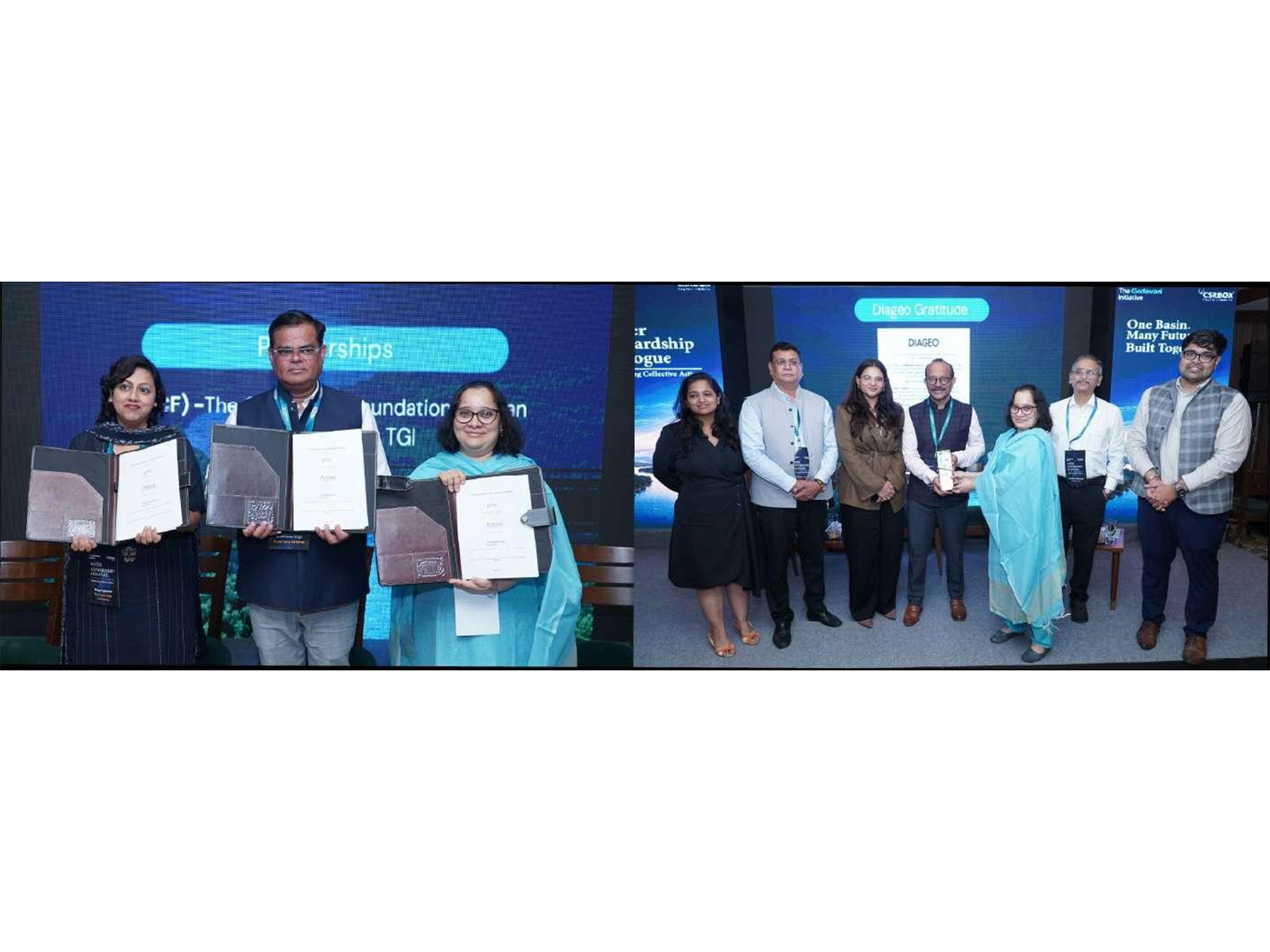
The programme moved from the business case for water resilience to collective stewardship, institutional mechanisms, alignment with government priorities and collaboration for India’s water future. It brought together representatives from Diageo India, The Coca-Cola Company, Arvind Limited, L'Oréal India, Government of Maharashtra, civil society organisations and a wider group of corporate and ecosystem partners.
The Dialogue also marked the second anniversary of The Godavari Initiative (TGI), which has evolved over the past two years from an ambitious proposition into one of India’s prominent basin-level collective action platforms.
Two years of building the architecture for collective action
TGI was established around a simple premise: water must be addressed at the scale at which it functions, the basin, rather than only through individual projects.
Conceived in alignment with the basin-level collective action principles advanced globally by the United Nations Global Compact CEO Water Mandate and the Water Resilience Coalition, TGI has brought together corporations, government institutions, non-profits, think tanks, technical organisations and ecosystem enablers around a shared objective: strengthening source sustainability and securing a more resilient future for the Godavari.
The initiative began with the support of Diageo India as Basin Champion, enabling TGI to build the foundations required for long-term collective action. These included research and basin intelligence, evidence-led programme design, stakeholder mobilisation, resilience-building interventions, institutional engagement and the development of a dedicated TGI secretariat.
Over two years, the initiative has built an expanding ecosystem of partners and developed its Impact Aggregator, designed to bring interventions, organisations and evidence into a common basin-level view. TGI has also engaged IUCN India to strengthen standardisation around Nature-based Solutions and integrated frameworks such as RECAP4NDC to improve alignment between landscape interventions and wider national climate and resilience priorities.
Its work with government departments and basin institutions has sought to connect public priorities, corporate capabilities, technical knowledge and credible field delivery within a common architecture.
“At Diageo, we increasingly view water stewardship through the lens of collective action and the impact it can create. The Godavari Initiative is a strong example of this approach. Going forward, we aim to strengthen this spirit of collaboration and work closely with the government and our partners to understand and address the priorities of the Godavari River Basin”
Devashish Dasgupta, Corporate Relations Director, Diageo India
From Maharashtra to the wider Godavari basin
TGI is now extending its engagement beyond Maharashtra into Telangana and Andhra Pradesh, reflecting the hydrological reality that a river basin cannot be approached through administrative boundaries alone.
The next phase will focus on deeper on-ground action, stronger government convergence, basin intelligence, Nature-based Solutions, collaborative investment pathways and measurable outcomes across priority landscapes.
At the same time, the experience of building TGI is increasingly informing other basin-level collective action efforts across India. The ambition is not to replicate one programme geography by geography, but to demonstrate that the underlying architecture of collective action can be adapted elsewhere: shared intelligence, common priorities, aligned capital, credible field delivery, government convergence and shared evidence.
TGI’s stated long-term ambition is to develop a working, scalable and replicable collective action model for river basins across India.
The Coca-Cola Foundation joins the next phase
As TGI moves from institution-building towards a deeper action phase, The Coca-Cola Foundation will step forward as the next Basin Champion, building on the foundation established with Diageo India and supporting the initiative as it expands its geography, partnerships and ambition.
The development was announced during the partnerships segment of the Water Stewardship Dialogue, which was structured around the practice and institutionalisation of collective stewardship and the need to move from fragmented interventions towards convergence.
The transition is intended to reflect the philosophy at the heart of TGI itself: institutional leadership may evolve, but the collective purpose remains constant.
“Healthy watersheds are critical to local communities. That’s why The Coca-Cola Foundation supports nature-based solutions that help protect water resources, restore landscapes and strengthen community resilience, ”
Carlos Pagoaga, President, The Coca-Cola Foundation
Government participation remains central to that model. The Dialogue included perspectives from the Godavari River Management Board and the Soil and Water Conservation Department, Government of Maharashtra, reinforcing the importance of aligning corporate and philanthropic resources with public priorities and basin-level institutions.
“NGOs should come together with the government to work towards better outcomes for the people of Maharashtra. The Godavari Initiative and CSRBOX are doing wonderful work in Maharashtra. ”
Shri. Jitendra Papalkar IAS Ji, Secretary Soil and Water Conservation, Government of Maharashtra
Building an institution for the long term
The two-year milestone also marks the reconstitution of The Godavari Initiative as an independent not-for-profit institution with its own Board and governance architecture, giving the initiative the institutional continuity and neutrality required for a long-term basin agenda.
This evolution is designed to ensure that TGI remains larger than any individual partner, funding cycle or project portfolio, while providing a common platform through which successive corporate partners, governments, technical organisations, non-profits and communities can contribute.
The Water Stewardship Dialogue closed on a proposition increasingly relevant to corporate India: site-level efficiency remains important, but lasting water security depends upon the resilience of the basin around it. The event’s own framing captured the distinction succinctly: site efficiency protects a plant; basin resilience protects the conditions around it.
For TGI, the next chapter is therefore less about adding projects and more about converting two years of institutional architecture into collective consequence at scale.
About The Godavari Initiative
The Godavari Initiative is a basin-level collective action platform working towards source sustainability and a resilient future for the Godavari. It brings together businesses, governments, non-profits, technical institutions, think tanks, communities and ecosystem partners around evidence-led, collaborative action. TGI is expanding its engagement from Maharashtra into Telangana and Andhra Pradesh while developing its experience as a reference model for basin-level collective action across India.
(ADVERTORIAL DISCLAIMER: The above press release has been provided by VMPL. ANI will not be responsible in any way for the content of the same)