VMPL
Singapore, September 24: The global semiconductor industry will need more than one million additional skilled workers by 2030, more than 100,000 a year, according to Deloitte. This is intensifying competition for engineers and technical talent as countries expand semiconductor capabilities and companies seek increasingly specialised skills.
In Singapore, semiconductor engineers, instrumentation engineers and process engineers are among occupations on Singapore’s Shortage Occupation List, which identifies roles based on factors including the degree and nature of labour shortages and their strategic importance to Singapore’s economy. Eligible semiconductor roles include integrated circuit designers and microchip engineers.
The scale of the challenge means the industry cannot rely on competing for the same finite pool of talent. It needs to widen the pipeline earlier, give emerging engineers greater exposure to semiconductor careers and strengthen the connections between technical education and industry.
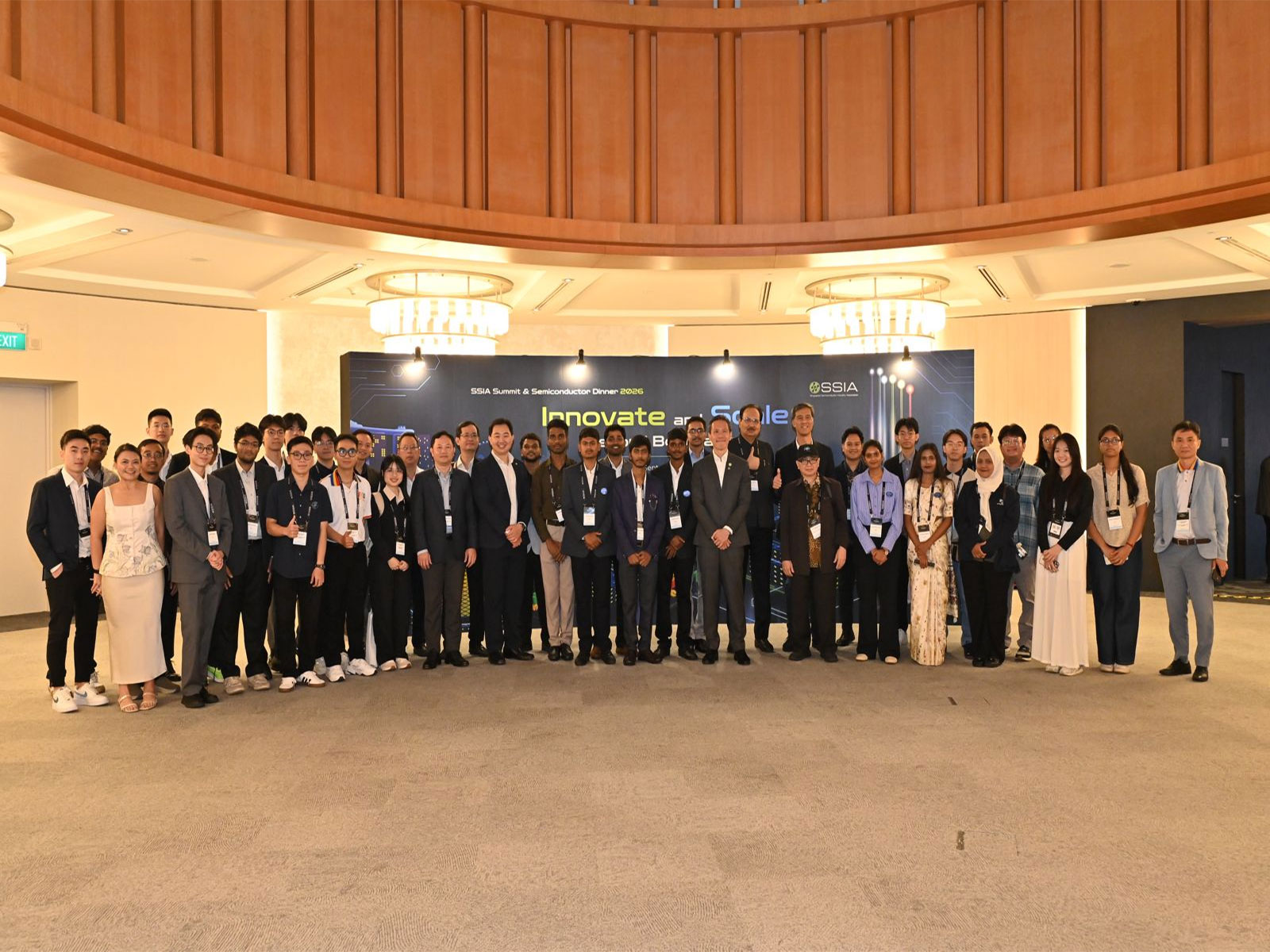
Against this backdrop, the Singapore Semiconductor Industry Association (SSIA) is launching its first Regional Student Talent Exchange. The programme brings together more than 50 students and educators from Singapore, India, Indonesia, Vietnam and Malaysia, connecting emerging technical talent with industry and one another before they enter the workforce.
Participants are already pursuing disciplines relevant to the semiconductor industry, spanning chip design, embedded systems, electronics engineering and manufacturing, wearable electronics and computer science.
THE TALENT CHALLENGE STARTS BEFORE HIRING
For SSIA, addressing the shortage means looking further upstream.
While recruitment remains important, the longer-term challenge is to build a stronger pipeline, helping emerging talent understand where their technical skills can take them and giving them meaningful industry exposure while they are still considering their career paths.
Ang Wee Seng, Executive Director of SSIA, said:
“If everyone waits until engineers graduate and then competes for the same pool of talent, we have not expanded the pipeline.
“We need to start earlier, giving students meaningful exposure to industry, helping them understand how their technical skills translate into semiconductor careers, and building the connections that will prepare them for the industry they are entering.
“No single country builds a chip alone. The same is true of the talent behind it. As semiconductor capabilities grow across Asia, we need a generation of engineers who not only have technical depth, but understand how their expertise connects across technologies, companies and markets.”
BRIDGING TECHNICAL EDUCATION AND INDUSTRY
The inaugural exchange brings together students from institutions including Vietnam–Korea University of Information and Communication Technology (VKU), The University of Danang; Ho Chi Minh City University of Technology (HCMUT); Politeknik Negeri Batam; NIELIT; and Universiti Teknologi Malaysia (UTM).
Participants from Vietnam include students specialising in chip and integrated circuit design. Students from India bring backgrounds spanning electronics engineering, embedded systems, electronics design technology and wearable electronics, while participants from Indonesia include students studying electronics engineering technology and electronics manufacturing.
Through engagements with semiconductor companies, engineers, industry leaders and their peers, students will gain first-hand exposure to Singapore’s semiconductor ecosystem and a broader understanding of how design, manufacturing and technology connect across the value chain.
Prof. M. M. Tripathi,Director General, India, said:
“NIELIT greatly values its collaboration with the Singapore Semiconductor Industry Association (SSIA), which provides a meaningful platform for strengthening India–Singapore cooperation in the semiconductor and electronics ecosystem. The participation of students and faculty from NIELIT Deemed to be University campuses in the SSIA Regional Exchange and Summit 2026 is an important step towards providing our young talent with international exposure, industry insights and opportunities for knowledge exchange.
Through this collaboration, NIELIT and SSIA are creating valuable avenues for academic–industry engagement, capacity building and development of globally relevant semiconductor talent. We look forward to further deepening this partnership and building stronger bridges between the semiconductor ecosystems of India and Singapore.”
BUILDING REGIONAL CONNECTIONS AROUND TALENT
The exchange reflects the international nature of an industry where research, design, manufacturing, assembly and testing routinely span multiple markets.
As countries across Asia strengthen their own semiconductor capabilities, SSIA sees an opportunity to complement national talent development with greater industry exposure and connections across the region.
H.E. Trần Phước Anh, Ambassador of Vietnam to Singapore, said:
“Semiconductors are a regional and global industry, and the talent driving this sector must have the same international outlook. Early opportunities for students to engage with industry and peers across borders can help build the networks, knowledge and perspectives that will shape their future careers.”
SSIA intends to build on the inaugural exchange by deepening connections between educational institutions, emerging talent and semiconductor companies across the region.
The Regional Student Talent Exchange takes place on 23 to 25 September 2026, as an extension to SSIA Summit 2026 at Resorts World Sentosa.
(ADVERTORIAL DISCLAIMER: The above press release has been provided by VMPL. ANI will not be responsible in any way for the content of the same.)